Finds loads for drivers
The dispatcher searches load boards for trips that fit a specific truck by route, weight and rate.
Build a remote career inside American freight.
We train dispatchers from scratch in three weeks: finding loads, negotiating with brokers, running the trip and handling the paperwork — then a graded exam that shows what you can really do.
The US has hundreds of thousands of trucks, and around 90% of freight moves through brokers. A dispatcher is the person who finds those loads for drivers and runs the trip. A remote profession in the American logistics market.
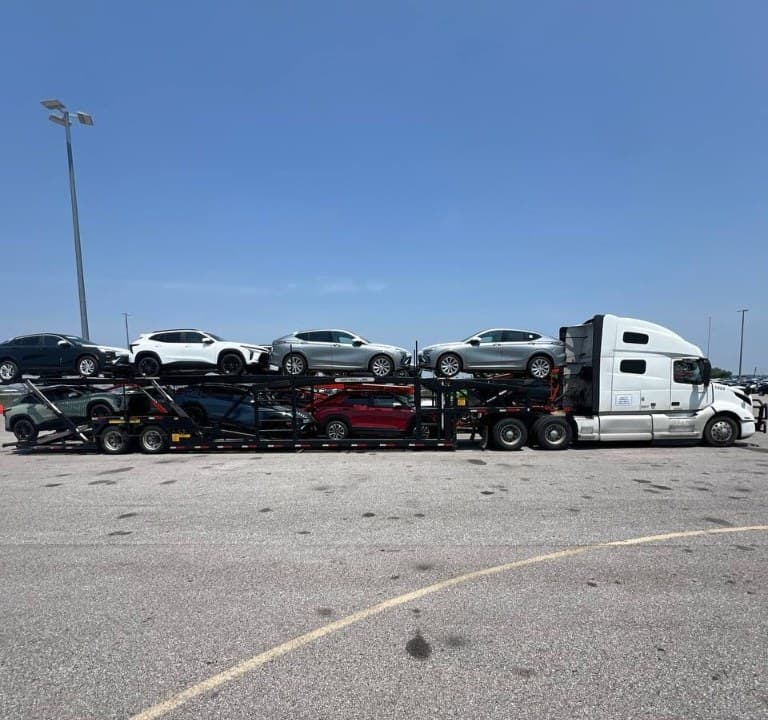
Car Hauling — moving vehicles on car carriers — is a separate niche with its own rules. At OLC Dispatch this is exactly what we teach.
The dispatcher searches load boards for trips that fit a specific truck by route, weight and rate.
Agrees terms and rates by phone and email. These are negotiations with clear scripts — and that is what we teach.
Makes sure the driver loads and delivers on time: the route, the status updates, the problems that come up on the road.
Rate confirmation, BOL, invoices — the documents every shipment rests on. We go through each of them.
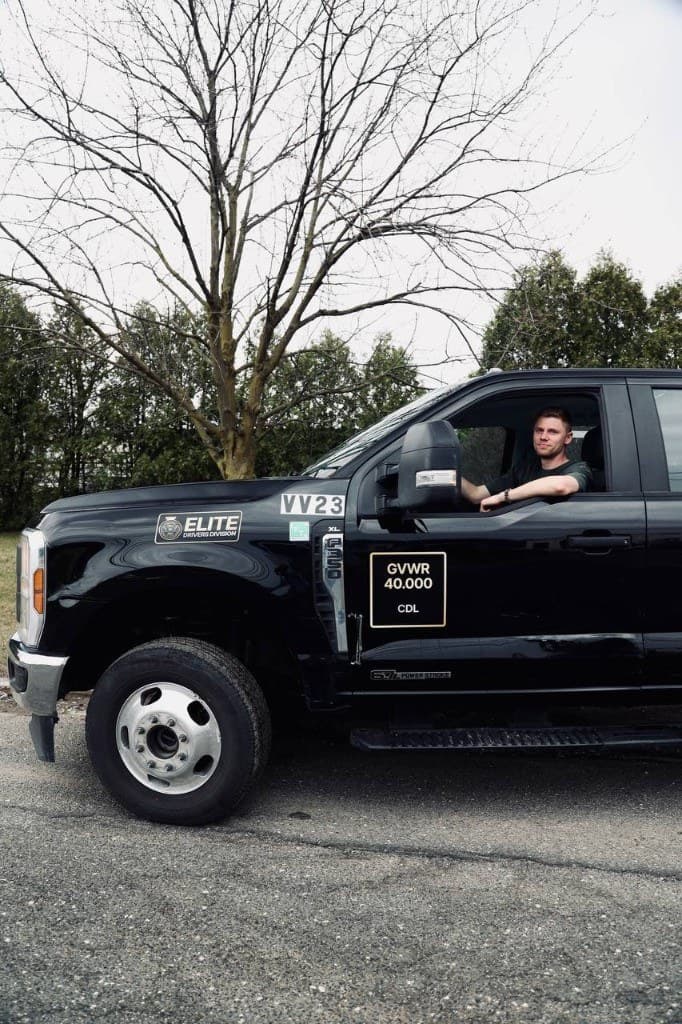
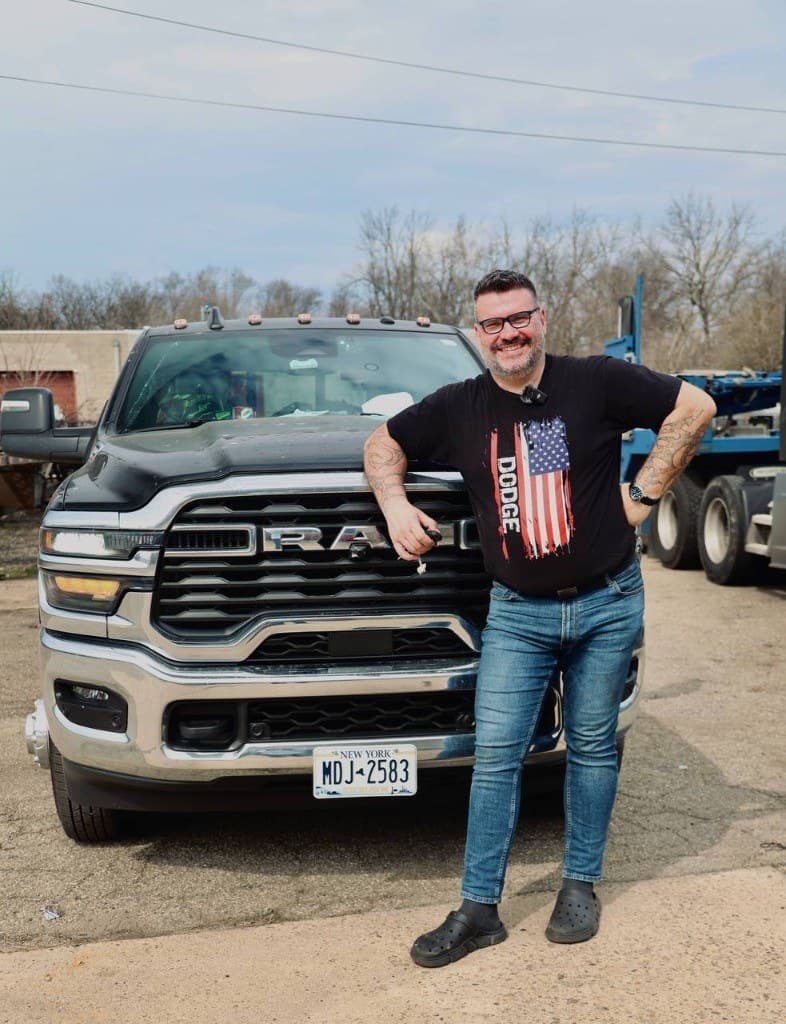
We have been dispatching for more than six years, from Chișinău. We started as dispatchers ourselves — the course comes out of that work, not the other way around.
Today we run 60+ drivers on mixed trailers and a floor of 15 dispatchers. More than 500 drivers and 50+ dispatchers have come through the operation.
years as a dispatch company
where we are based
drivers on the road now
dispatchers on the floor
drivers who have come through us
dispatchers who have come through us
Market data fromIndeed
Your first months: one or two trucks, close support, and learning the rhythm of the market.
Three weeks: theory, live practice on the boards, then a graded exam. You are not taking notes — you are doing the work.
On the consultation we walk you through the full programme and answer questions about every topic.
Valentin and Igor finished the previous group. The certificates in their hands are the ones they earned at the exam.
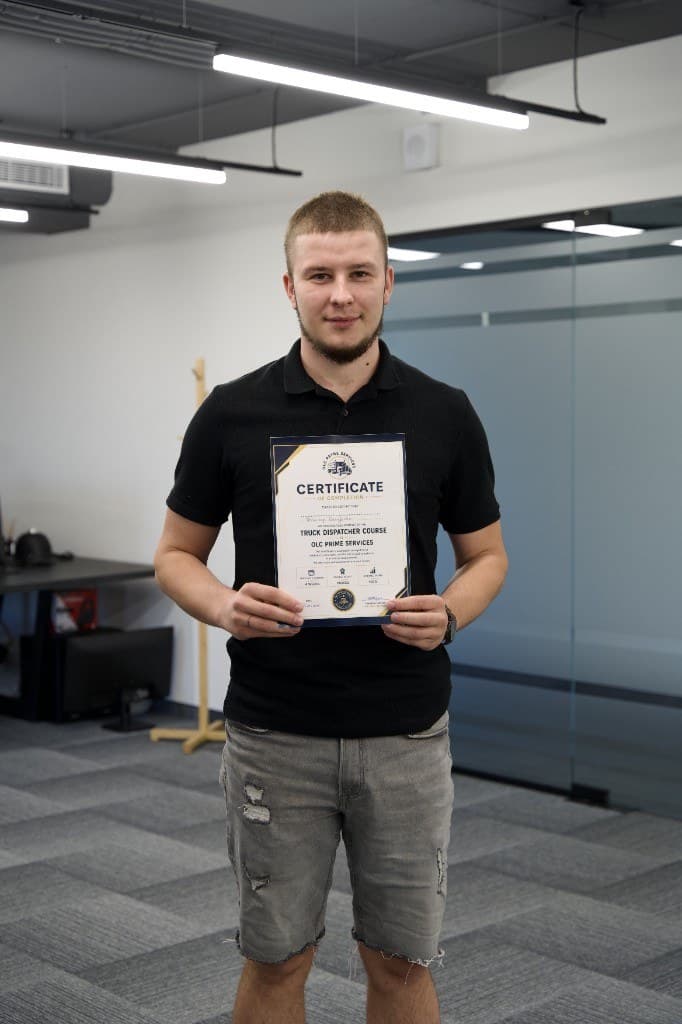
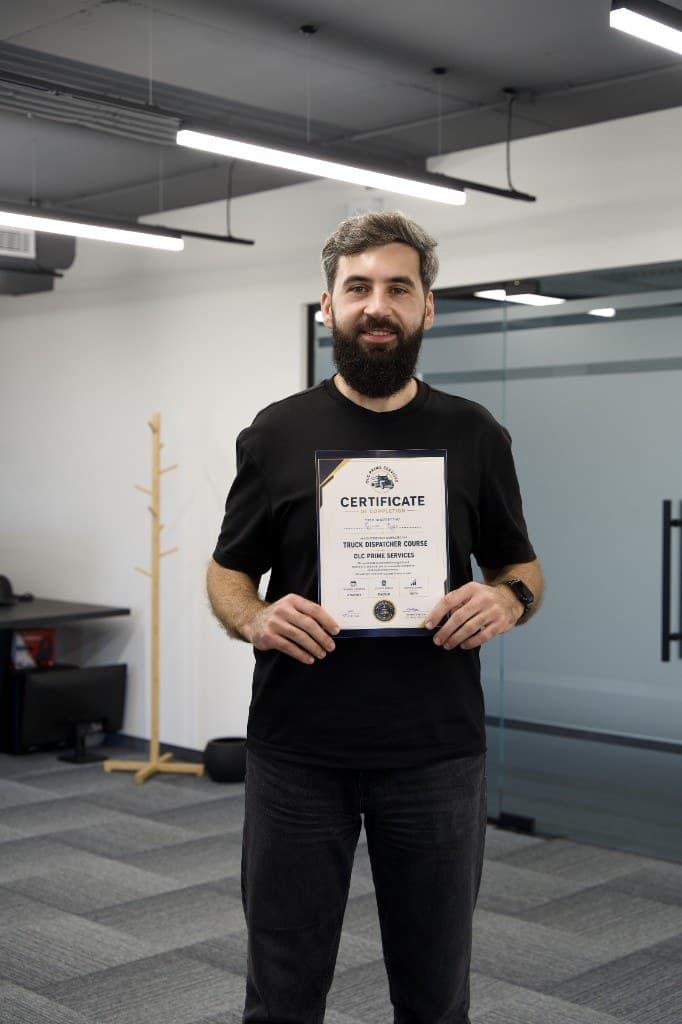
One format, run live in a small group. Each week has a single job to do — and the last one is where you show what you can actually do.
How freight moves in the US: carriers, brokers, lanes, rates and the documents behind every load. Live evening sessions, with homework that gets marked.
You work the boards yourself — DAT, Central Dispatch, Super Dispatch. Finding loads, pricing them, and calling brokers using the scripts we drill in class.
One dispatch scenario, end to end, graded: book the load, defend the rate, file the paperwork. Your result is what we go on afterwards.
The exam is a chance to show what you can do. We recommend the strongest people from each group to our partners first — and occasionally take someone on ourselves. What happens next depends on how you work, not on the fee.
The full three weeks in a room of no more than seven, so the instructor still sees every person in it.
The same three weeks one-on-one, on a schedule built around yours, with every session spent on your own gaps.
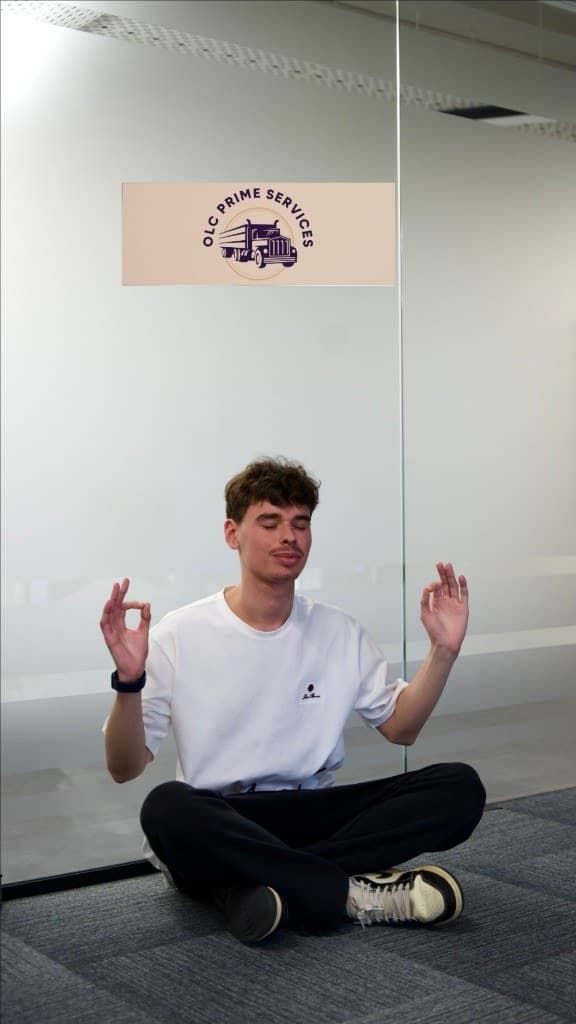
Robert is a practitioner, not a "course speaker". He still works in dispatch every day and brings the same loads, calls and paperwork he handles himself into the lessons. That is why the group is capped at seven — he can actually see every student in it.
In his own wordsThe most valuable thing is not simply passing on knowledge. It is watching a person start to understand the profession, grow more confident and realise: they really can change their life.
Six stages with no sales magic in between.
You leave your contacts — we call within one business day.
We go through your situation and goals. Free, with no obligation to buy.
Mini-group or one-on-one mentorship — around your schedule and your goals.
The market, the tools, the paperwork and the negotiations, reinforced with marked homework.
A dispatcher's real scenarios: finding loads, working out rates, running the trip.
A graded scenario end to end — and an honest conversation about where you go next.
The consultation is not a sales call. We look at your situation, assess your English, explain the training and the price. If we see that dispatch is not for you, we say so directly: graduates with results matter more to us than random payments.
What happens after the exam?
The exam is where we see how you actually work. The strongest people from each group are the ones we recommend to our partners first, and occasionally take on ourselves. Training and a graded exam are what the course includes — what follows depends on how you show up in week three.
My English is weak. Is this course still for me?
Dispatch English is narrow and repetitive: a few dozen phrases, the same questions, the same documents. If you can read with a dictionary, you can start. We give you the scripts and drill them — and if your English is genuinely at zero, we will tell you on the consultation.
I know nothing about logistics.
Nobody in the group does on day one. Week one starts at the beginning: who the carrier is, who the broker is, why the load moves at all. Prior experience is not an advantage here — attention is.
A manager will get in touch, ask about your goal and your English, help you pick the option that fits, show you the programme and answer your questions. Only then do you decide.
Prefer to message us directly?